
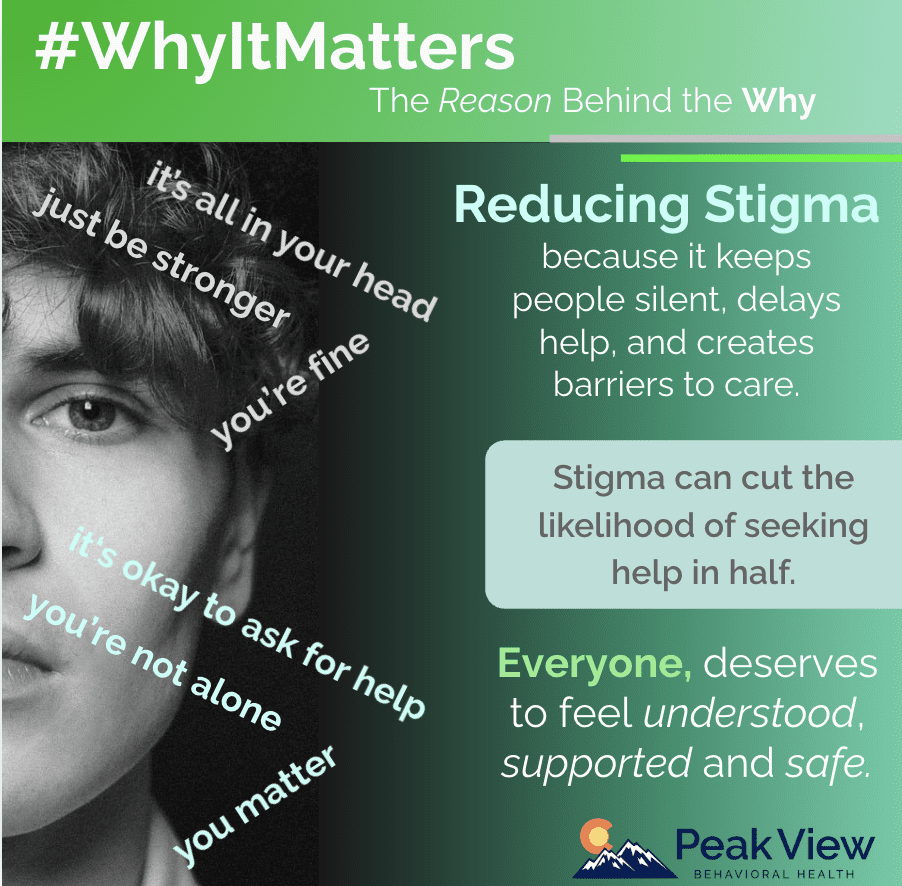
The Reason Behind the Why
The biggest barrier to mental health care isn’t access. It’s stigma.
This work is deeply human and, because of that, it’s shaped not only by the care we provide, but by the way people feel they’ll be seen when they reach for it.
For many, that starting point is influenced by stigma. Not always in ways that are obvious or intentional, but in the quiet understanding that opening up might lead to being judged, misunderstood, or viewed differently than before.
Because of that, people often carry what they’re going through on their own. They stay quiet. They wait. And in that waiting, something that could’ve been addressed earlier becomes heavier, more complex, and more difficult to navigate.
The Weight of Silence
Stigma doesn’t just live in perception. It shapes decisions.
It influences whether someone reaches out or chooses not to. Research continues to show that when individuals believe they’ll be judged for what they’re experiencing, they’re significantly less likely to seek care. In fact, in some cases, nearly half of individuals say they’re unlikely to access mental health support due to stigma alone.
That hesitation isn’t usually about whether support exists. It’s about whether it feels safe to access it. And whether it’s safe to be honest. Safe to be understood. Safe to be treated with dignity.
When that sense of safety isn’t there, silence can feel like the better option. But that silence carries weight. It delays care, allows symptoms to worsen, and creates distance between people and the support that could make a difference. It can also contribute to more serious long-term outcomes, as stigma has been linked to poorer health and an increased risk of mortality when care is delayed or avoided.
In some cases, it even impacts how physical health concerns are interpreted, with mental health diagnoses shaping how symptoms are seen or, at times, overlooked.
What begins at the individual level doesn’t stay there. Over time, these experiences influence entire communities, widening gaps in access and making it harder for people to engage with care in a meaningful way.
When Perspective Begins to Shift
And yet, stigma isn’t permanent. It’s something that can change, often in the same quiet ways it was created.
In conversations. In how we respond when someone shares something personal. In the language we choose and the space we create.
Because when someone feels genuinely met with compassion, something begins to open. They speak more freely. They reach out sooner. They begin to see that asking for help isn’t something to avoid, but something that can move them forward.
Those moments may not feel significant on their own, but they carry impact. They build trust. They create momentum. And over time, they begin to shape how people experience care, not just individually, but collectively.
From Awareness to Action
Reducing stigma isn’t about a single conversation or a one-time effort.
It’s built through consistency. Through showing up in a way that reinforces dignity, respect, and understanding, every time someone decides to share part of their story.
As that becomes more common, something larger begins to take shape. Environments begin to feel safer. Engagement becomes more natural. And systems that once felt distant begin to feel more responsive and more human.
This is how change happens. Not only through large initiatives, but through everyday interactions that redefine what it feels like to be supported.
This Is Why It Matters
But when we begin to reduce stigma, something meaningful starts to shift.
We create space for people to speak, not cautiously, but honestly.
We create a sense of safety that allows people to seek support sooner, before what they’re carrying becomes overwhelming. We replace judgment with compassion, and in doing so, we change how people experience care from their very first step forward.
Over time, those shifts begin to shape something larger. They influence how communities respond, how systems engage, and how individuals begin to see themselves within the context of their own story.
Because stigma often works quietly.
It shows up in moments where someone decides not to speak, not to seek help, or starts to believe that things won’t change. It reinforces distance, hesitation, and the feeling that what they’re experiencing is something they have to carry alone.
But reducing stigma can begin just as quietly.
It can start with a single conversation where someone feels understood rather than judged. In a moment where compassion replaces assumption. In the realization that they aren’t alone in what they’re experiencing, and that their story can be met with care instead of hesitation.
And within that moment, something begins to shift.
Not just the willingness to seek help, but the belief that it’s safe to do so. That support isn’t something reserved for others, but is something they deserve as well. That what they’ve been through doesn’t define who they are, what their future looks like, or what’s possible for them.
That belief carries weight. It creates movement. It allows someone to take a step they may not have taken before. And sometimes, that step is where everything begins to change.
Because when we stand against stigma, we’re not just changing conversations. We’re reinforcing dignity, expanding access, and creating space for healing to take hold.
And at its core, that’s what this work has always been about.
People matter. And every effort to reduce stigma reflects that truth.
Learn More:
Mental Health Stigma | Mental Health | CDC
2023 CHAS: Mental Health | Colorado Health Institute
The overwhelming case for ending stigma and discrimination in mental health