
Looking Beyond What We See
Every person carries a story we cannot fully see.
Sometimes that story includes loss. Sometimes it includes adversity, neglect, violence, instability, or experiences that left a lasting impact. While we may never know the full details of someone’s journey, the experiences people carry often influence how they respond to stress, build relationships, navigate challenges, and move through the world.
Too often, we only see the behavior.
We see frustration, withdrawal, anger, mistrust, anxiety, or resistance. We see someone’s reaction, but not always the experiences that helped shape it. When we focus only on what is happening in front of us, it becomes easy to make assumptions. We may interpret a response as difficult, uncooperative, or even inappropriate without understanding the context behind it.
Trauma-informed approaches invite us to pause and look deeper.
Rather than asking, “What’s wrong with this person?” they encourage us to consider a different question:
“What might this person have experienced?”
That question may seem simple, but it has the power to completely change how we understand, support, and connect with others.
The Impact That Often Goes Unseen
Trauma is far more common than many people realize.
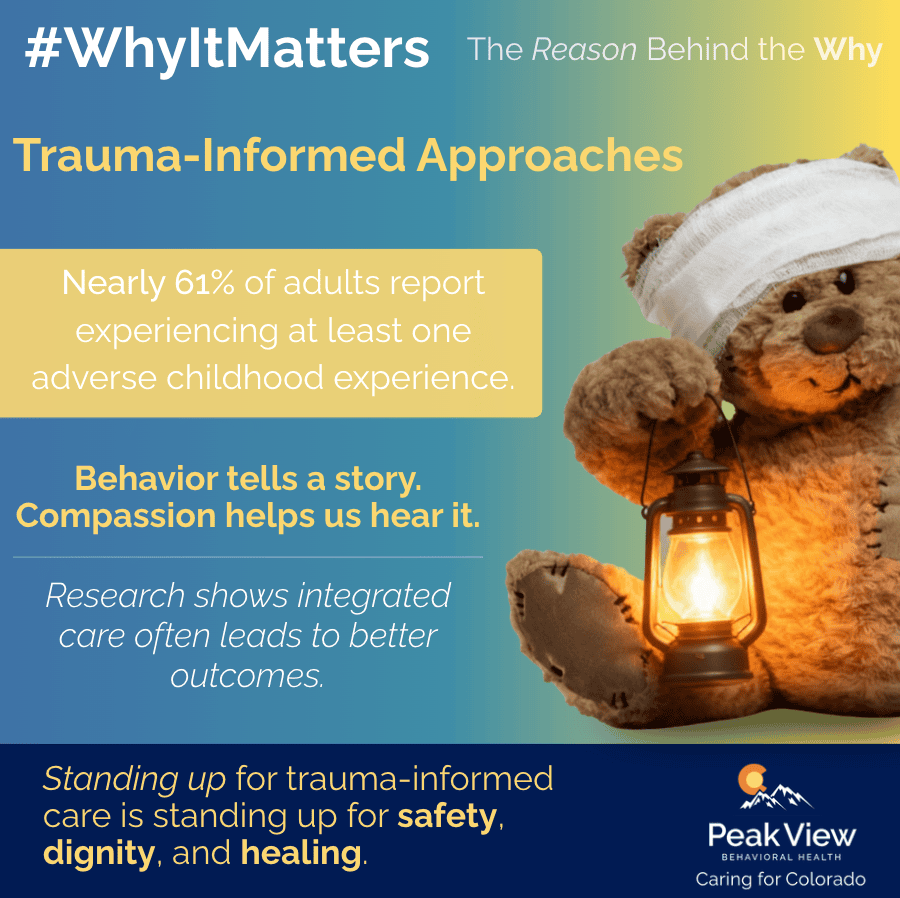
Research shows that nearly 61 percent of adults report experiencing at least one adverse childhood experience, often referred to as an ACE. These experiences can include abuse, neglect, household dysfunction, or other significant stressors during childhood. While not everyone who experiences adversity develops long-term challenges, trauma can have lasting effects on physical health, mental health, relationships, and overall well-being.
Trauma can influence how safe people feel, how much they trust others, how they process emotions, and how they respond during moments of uncertainty or stress. In many cases, the behaviors that seem confusing on the surface are actually adaptations that once helped someone survive difficult circumstances.
Understanding this does not excuse harmful behavior. It helps explain it.
And when we understand where behaviors may come from, we are often better equipped to respond in ways that promote healing rather than unintentionally creating more harm.
Creating Space for Healing
At its core, trauma-informed care is about recognizing the humanity behind every interaction. It acknowledges that many people have experienced adversity and that those experiences matter.
Rather than focusing solely on symptoms or behaviors, trauma-informed approaches seek to create environments where people feel safe, respected, heard, and empowered.
That can happen in hospitals and behavioral healthcare settings. It can happen in schools. It can happen in workplaces. And it can happen in our daily conversations. Sometimes, trauma-informed care looks like offering choices rather than making demands. Sometimes it means taking additional time to build trust. Other times it means responding with curiosity rather than judgment.
These moments may seem small, but they communicate something powerful. They tell people they are safe, that they are seen, and that their experiences matter. For many individuals, those messages become the foundation upon which healing begins, creating the trust, connection, and sense of safety needed to move forward.
The Ripple Effect of Understanding
Trauma-informed approaches do more than help individuals heal. They strengthen relationships, improve engagement in care, and build trust between people and the systems designed to support them. Most importantly, they help create environments where individuals feel respected, supported, and understood rather than defined by their struggles.
Research continues to show that integrated approaches to care often lead to better outcomes because they recognize that healing rarely occurs through a single intervention. Support systems, relationships, evidence-based therapies, community connections, and safe environments all play a role in helping people move forward.