The Reason Behind the Why
Recovery matters because millions of people are living proof that healing is possible, and every person deserves the chance, the support, and the dignity to reclaim their life.
Substance use disorder is one of the most misunderstood and stigmatized health conditions in our communities. Too often, conversations about addiction are framed through blame, judgment, or silence. But the reality is far more human and far more hopeful.
A Widespread, Often Unmet Need
Behind every statistic is a person with a story, a family, and a future that still matters.
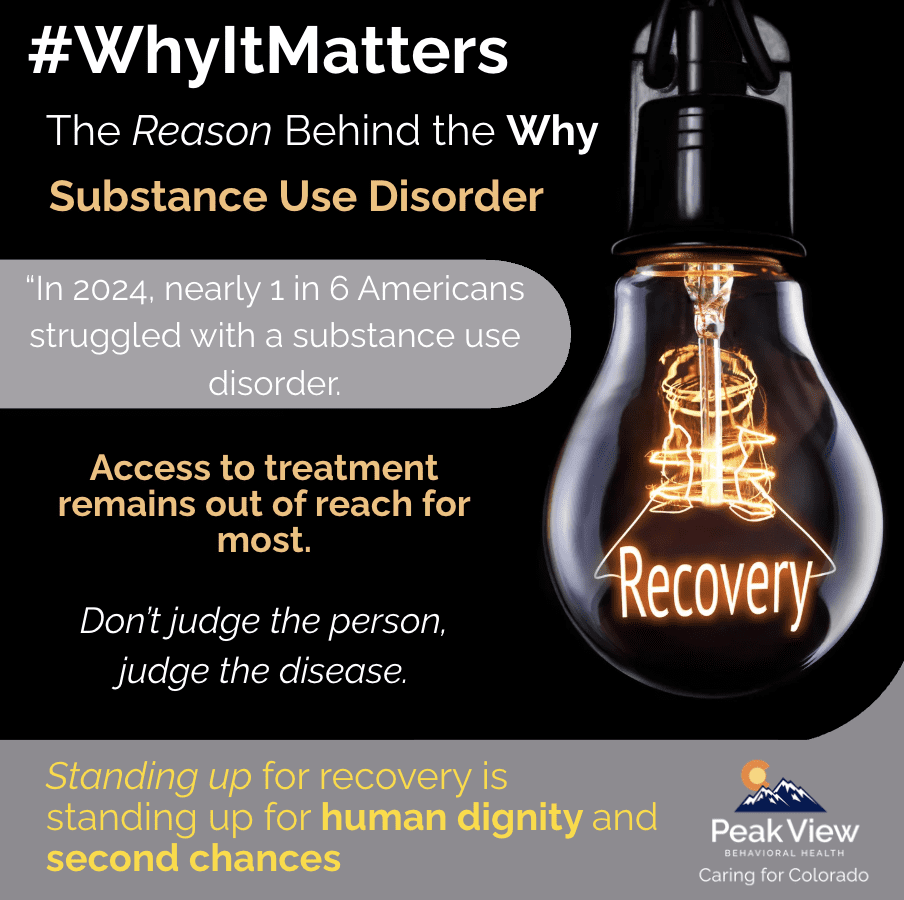
In 2024, an estimated 48.4 million Americans met criteria for a substance use disorder, representing nearly 1 in 6 people ages 12 and older. Despite how common substance use disorder is, the majority of individuals never receive the care or support they need.
Barriers such as stigma, lack of access, financial constraints, workforce shortages, and fear of judgment continue to prevent people from seeking help. These gaps do not reflect a lack of willingness to recover. They reflect systemic challenges that communities must address together.
Addiction Is Not a Moral Failing
Substance use disorder is not a character flaw or a failure of willpower.
Research consistently shows that addiction is a treatable brain disease, influenced by genetics, environment, trauma, mental health, and social determinants of health. Evidence‑based treatment and recovery supports help millions of people improve their health, rebuild relationships, and regain stability each year.
When we understand substance use disorder through a medical and public health lens, rather than a moral one, we open the door to compassion, effective care, and meaningful recovery.
Recovery Thrives in Community
Recovery does not happen in isolation.
It happens when communities choose acceptance over judgment, connection over shame, and support over barriers. Recovery is strengthened through safe relationships, accessible care, peer support, education, and systems that meet people where they are.
Advocacy, empathy, and understanding are often the factors that make it possible for someone to take the first step. A supportive conversation. A trusted referral. A community that believes change is possible.
These moments matter and they save lives.
Standing Up for Recovery Is Standing Up for Human Dignity
When we stand up for recovery, we stand up for:
- Human dignity
- Second chances
- Families and futures restored
- Communities made stronger
No one should be defined by their hardest moment. Recovery reminds us that people are more than their diagnoses, their past, or their struggles.
Recovery is real. And support changes lives.
Our Commitment
We should believe recovery is possible for everyone. We should be committed to reducing stigma, expanding access to care, and supporting individuals and families with compassion, evidence‑based treatments, and community partnerships.
Because when recovery is supported, entire communities heal.
Learn More:
NIDA IC Fact Sheet 2024 | National Institute on Drug Abuse (NIDA)