Understanding mental health isn’t extra knowledge. It’s essential.
Mental health literacy matters because knowing the signs, understanding what we’re experiencing, and knowing where to get help can be the difference between suffering in silence and getting support.
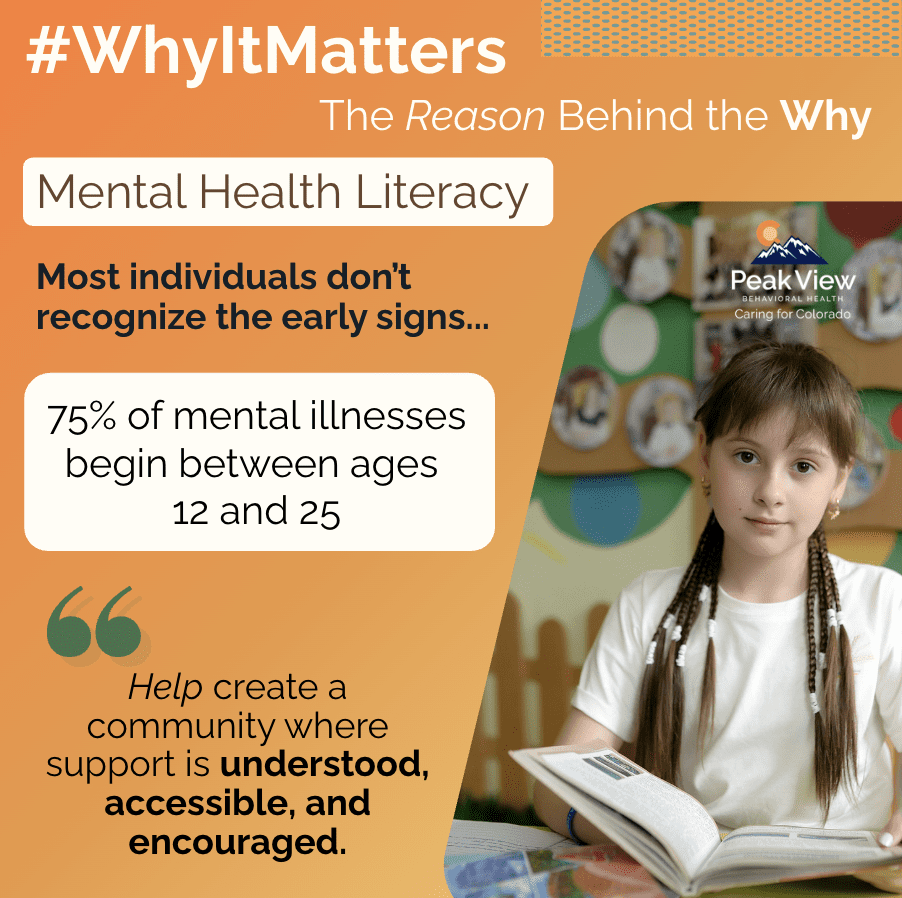
It also matters because people deserve clarity, not confusion, when facing mental or emotional challenges. Most individuals do not recognize the early signs of a mental health concern, and fewer than half of youth can identify symptoms of depression, even though 75 percent of mental illnesses begin between the ages of 12 and 25.
Research shows that mental health literacy increases the likelihood that someone will seek help. Low mental health literacy is linked to higher self-stigma and a reduced willingness to reach out when it matters most. On average, eight to eleven years pass between the first symptoms and treatment. The cost of not understanding mental health is far too high.
Improving mental health literacy helps people recognize concerns earlier, navigate challenges with confidence, and seek care before a crisis develops. It strengthens compassion, reduces stigma, and helps build a community where support is understood, accessible, and encouraged.
Mental health literacy starts with awareness, and awareness starts with each of us.
Learn More:
Early identification of mental health issues in young people | Mental Health America
Data and Statistics on Children’s Mental Health | Children’s Mental Health | CDC
Mental Health Literacy: It Is Now Time to Put Knowledge into Practice – PMC