
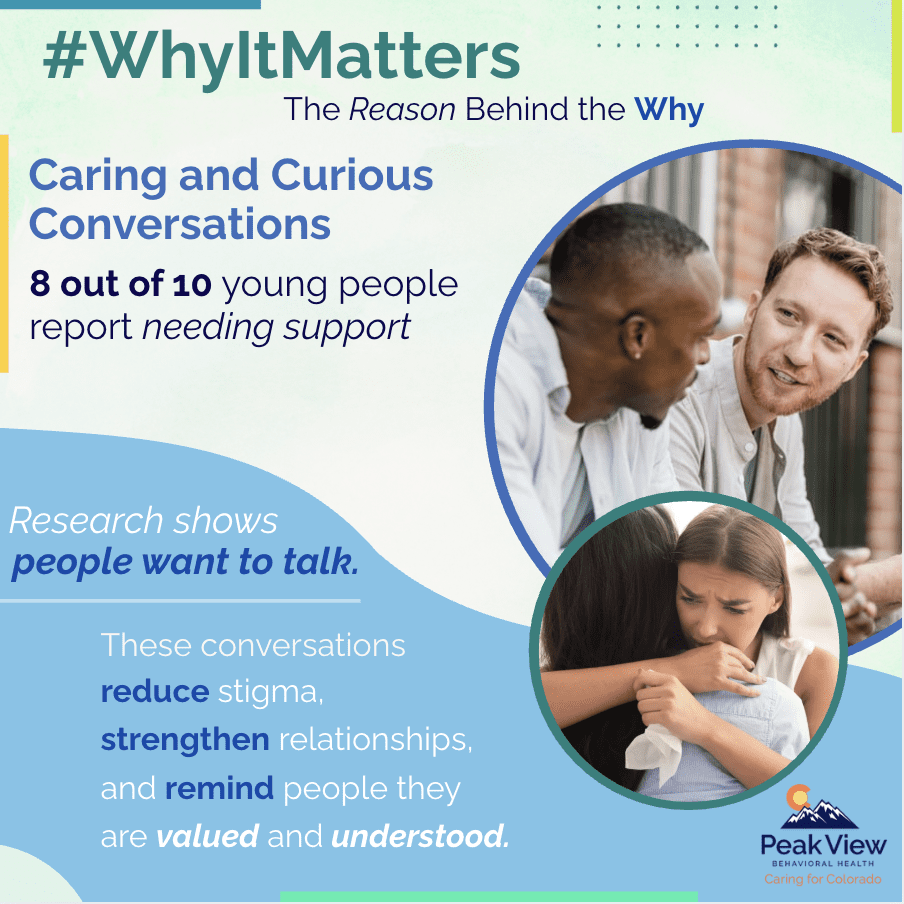
The Reason Behind the Why
Curious and Caring Conversations
Curious and caring conversations matter because when we take the time to ask, listen, and truly show up for one another, we create connection, reduce isolation, and open the door for people to feel seen, heard, and supported.
The conversations we often avoid are often the ones that matter most.
A Simple Conversation Can Change Everything
When someone feels genuinely heard, it reminds them they don’t have to carry their struggles alone.
These moments may seem small, but they have a powerful impact. A single conversation can strengthen a connection, build trust, and even become a turning point in someone’s emotional well-being.
Often, support does not begin in a clinical setting. It begins in everyday moments with friends, family members, coworkers, and community members willing to listen.
The Need for Connection Is Clear
The data reinforces what many of us already know.
National surveys show that more than half of Americans feel comfortable talking about their mental health with a close friend or family member. Among young people, the need is even more pronounced. Many report needing emotional support regularly, and most turn to their peers for guidance before ever reaching out to a professional.
These conversations are not just helpful. They are often the first step toward care.
Yet despite this, many people still hesitate to start the conversation. Fear of saying the wrong thing, uncertainty about how to respond, or concern about overstepping can keep us silent when someone may need connection the most.
Curiosity and Care Create Safer Spaces
When we approach others with curiosity rather than assumptions, and with care rather than judgment, we create space for honest dialogue.
You do not have to have all the answers.
You do not have to fix the situation.
Simply asking, “How are you, really?” and being willing to listen can make a meaningful difference.
These conversations:
Reduce stigma
Strengthen relationships
Encourage openness
Remind people they are valued and understood
Connection does not require perfection. It requires presence.
Connection Is a Form of Support
Support is not always found in solutions. It is found in showing up.
Listening without interrupting, responding without judgment, and staying present without needing to “fix” creates a sense of safety that many people may not experience elsewhere.
For someone who is struggling, that kind of space can be powerful. It can help them take the next step, whether that is opening up further, seeking professional help, or simply feeling less alone.
Creating a Culture Where Conversations Happen
Curious and caring conversations help shift the way communities approach mental health.
When we normalize talking about emotional well-being, we reduce stigma and make it easier for people to reach out when they need support. Over time, these small, intentional moments build stronger, more connected communities.
Because change does not always start with systems.
Sometimes, it starts with a conversation.
Our Commitment
We believe that connection is a critical part of mental health and well-being.